

Brain Fog at Work: Causes, Fixes & When to Consider a Supplement
It’s 3 PM. You’ve had lunch, you’re caffeinated, and you’re staring at a task you knew how to do yesterday — except right now your brain feels like it’s wading through wet cement. That fuzzy, unfocused, can’t-quite-think-straight feeling has a name: brain fog. And if it shows up at your desk more often than you’d like, you’re far from alone — brain fog at work is one of the most common productivity complaints among students and working professionals alike.
The good news is that brain fog is rarely a mystery. It almost always traces back to a handful of daily habits, and most of them are fixable without a single supplement. This guide walks through what’s actually causing it, practical fixes you can start today, and where nutritional support genuinely fits in — and where it doesn’t.
What Is Brain Fog, Exactly?
Brain fog isn’t a medical diagnosis — it’s a catch-all term for a cluster of symptoms: difficulty concentrating, slower thinking, forgetfulness, mental fatigue, and a general sense of cognitive fuzziness. It’s different from simply being tired. You can sleep eight hours and still hit brain fog at work by mid-morning if the underlying cause isn’t sleep at all.
For most people, brain fog at work is situational and reversible. It builds up from a combination of small daily gaps — not enough water, too much sitting, screens for ten hours straight — rather than one single cause.
Common Causes of Brain Fog at Work
1. Poor or Inconsistent Sleep
Sleep is when the brain clears out metabolic waste and consolidates memory. Even a single night of poor sleep measurably slows reaction time and working memory the next day — and irregular sleep timing (different bedtimes each night) can be just as disruptive as short sleep.
2. Dehydration
The brain is roughly 75% water. Studies on mild dehydration — as little as 1-2% of body weight — show measurable dips in concentration and short-term memory. Most people at a desk job simply don’t drink enough water across an eight-hour day, especially with air-conditioned offices masking the usual thirst cues.
3. Blood Sugar Swings
A heavy, carb-dense lunch followed by a sharp energy crash is one of the most common (and most overlooked) causes of afternoon brain fog at work. Skipping meals does the same thing in reverse — low blood sugar starves the brain of its primary fuel source.
4. Chronic Stress
Short bursts of stress can sharpen focus, but sustained, low-grade work stress does the opposite — it keeps cortisol elevated, which interferes with the prefrontal cortex, the part of the brain responsible for planning, focus, and decision-making.
5. Too Much Screen Time Without Breaks
Long, uninterrupted stretches of screen work lead to what researchers call attentional fatigue — the brain’s capacity for focused attention is a limited resource that depletes with continuous use and needs deliberate breaks to recover.
6. A Sedentary Workday
Movement increases blood flow to the brain. Sitting still for hours reduces it. Even short walking breaks have been shown to improve alertness and cognitive performance compared to sitting continuously.
Struggling with afternoon brain fog?
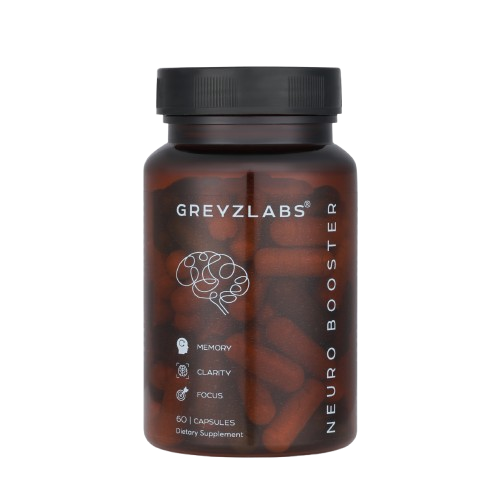
Neuro Booster™ is a stimulant-free daily supplement formulated to support sustained focus and mental clarity — no jitters, no crash.
How to Fix Brain Fog at Work
1. Fix Your Sleep Window First
Before anything else, aim for a consistent sleep and wake time — even on weekends. Consistency matters as much as total hours for how sharp you feel the next day.
2. Hydrate on a Schedule, Not by Thirst
Keep a bottle at your desk and set a rough target — roughly 2-2.5 litres across the workday for most adults, more in hot climates. Don’t wait to feel thirsty; by then, mild dehydration has often already set in.
3. Eat for Steady Energy
Favor protein and fibre over refined carbs at lunch to avoid the early-afternoon crash. A handful of nuts or a piece of fruit is a better 4 PM fix than another cup of coffee.
4. Take Real Breaks — Away From the Screen
A 5-minute break every 60-90 minutes, ideally away from a screen, measurably helps sustained attention hold up across the day. Even standing up and looking out a window counts.
5. Move, Even Briefly
A short walk — even five minutes around the office or a flight of stairs — increases blood flow to the brain and is one of the fastest ways to cut through an afternoon fog.
6. Consider Nutritional Support
If your sleep, hydration, and diet are already reasonably solid and you’re still hitting a wall most afternoons, that’s usually the point where a cognitive support supplement becomes worth considering — not as a replacement for the basics, but as an addition once they’re in place.
Where a Supplement Like Neuro Booster Fits In
It’s worth being honest here: no supplement fixes brain fog caused by five hours of sleep or a day without water. Fundamentals come first. But once those are handled and mental fatigue still creeps in by mid-afternoon, a well-formulated cognitive supplement can offer additional support for focus and mental clarity.
Neuro Booster™ is built around this idea — it’s stimulant-free (no caffeine crash), uses a fully disclosed ingredient list (Brahmi, Lion’s Mane, Ginkgo Biloba, L-Theanine among others), and is designed for daily, sustained use rather than a short-term jolt. It’s a support tool, not a substitute for sleep, hydration, or a proper lunch break.
Frequently Asked Questions
Is brain fog at work a sign of something serious?
Occasional brain fog is usually just a sign that sleep, hydration, or stress levels need attention. If it’s persistent, worsening, or accompanied by other symptoms, it’s worth speaking to a doctor to rule out underlying causes.
How quickly can I clear brain fog once it hits?
A short walk, a glass of water, and a 5-minute screen break can noticeably help within 15-20 minutes for situational fog. Fixing the root cause (like sleep debt) takes longer — often a few consistent days.
Does caffeine help with brain fog?
Short-term, yes — but it often just delays the crash and can worsen the cycle if relied on heavily, especially later in the day when it disrupts sleep.
How long does it take for a cognitive supplement to work?
Most natural nootropic ingredients (like Bacopa Monnieri or Lion’s Mane) are cumulative — many people notice initial changes in focus within 2-3 weeks of consistent daily use, with fuller effects building over 4-8 weeks.
Is Neuro Booster safe to take daily?
Neuro Booster is formulated to be non-habit forming and stimulant-free for daily use. As with any supplement, it’s a good idea to check with a healthcare provider first, particularly if you’re pregnant, nursing, or taking other medication.
The Bottom Line
Brain fog at work is common, usually explainable, and almost always improvable. Start with sleep, water, food, breaks, and movement — those five levers fix the majority of cases. If the fog persists once the basics are dialed in, that’s the point where a stimulant-free cognitive supplement can offer meaningful additional support.
Ready to support sharper, steadier focus?
Neuro Booster™ combines Brahmi, Lion’s Mane, and Ginkgo Biloba in a transparent, stimulant-free formula — built for daily mental clarity.
Neuro Booster is a nutritional supplement and is not intended to diagnose, treat, cure or prevent any disease. Consult a qualified healthcare professional before starting any supplement, particularly if you are pregnant, nursing, taking medication or managing a health condition.